The first DevTrails Original

Darwa Pass
Dodital

Seven days that start in the Yamuna Valley, cross Darwa Pass at 13,600 ft with Swargarohini and Bandarpoonch in front of you, and finish in the Ganga Valley. You do not come back the way you came.

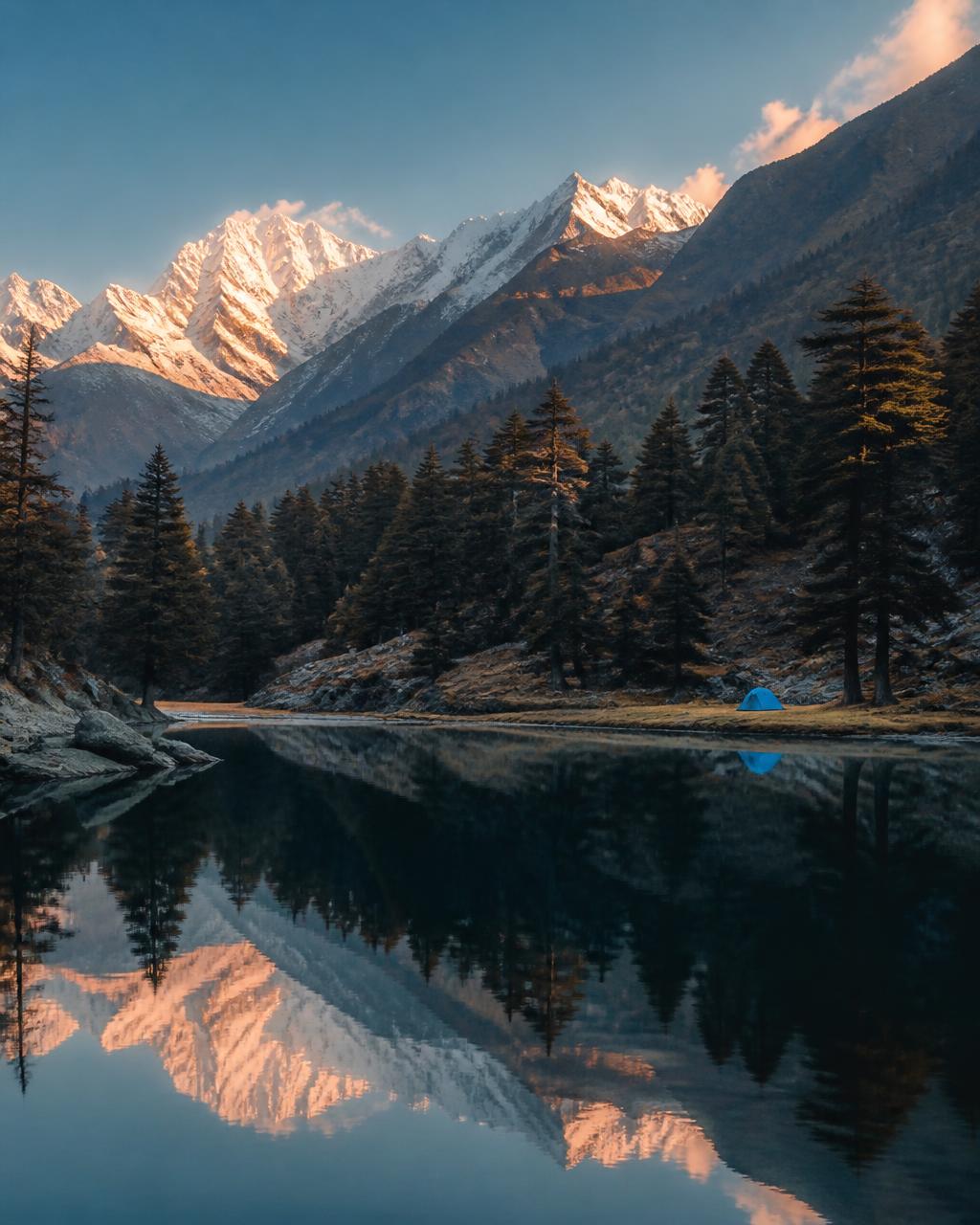
Dodital lake with the Darwa ridgeline behind it

Per person

₹14,000

High point

13,600 ft

7 – 13 Oct

First batch, 2026

7 days

Dehradun to Dehradun

13,600 ft

Darwa Pass, the high point

15 trekkers

Small group cap

Why this is an Original

A crossing, not a there-and-back

Almost every Dodital trip in the market walks in and out of the same trailhead at Sangamchatti. Ours does not.

We start on the Yamuna Valley side at Ranachatti, the road-head base camp for this route. Day 2 begins the walk from Hanumanchatti, climbing through forest and thatch to the camps below Darwa, crossing the pass at 13,600 ft, dropping to Dodital at 10,200 ft, and walking out to Agoda and Uttarkashi on the Ganga Valley side. You finish the trek in a different valley from the one you started in.

That is a structural difference, not a marketing line. It changes what you see each day, it means no repeated ground, and it is the honest reason this trek can call itself more than a standard Dodital package.

It is also the kind of route we built DevTrails Originals for: designed by us, paced by us, and run in a valley most operators skip.

Two valleys, two traditions

The stories along the way

This trail is guarded at both ends. Hanuman at the start in the Yamuna Valley, Ganesha at the lake on the other side.

Hanumanchatti, where the walking begins. During the Pandavas' exile, Bhima came across an old monkey lying across the trail with its tail blocking the way. He could not move it, and realised he was standing in front of Hanuman himself. The place carries his name, and it is where this trek actually starts.

Dodital carries two names, for two different reasons. The lake sits at 10,200 ft. "Dodital" comes from "Dodi", the local name for the golden Himalayan trout that live in the lake. Locals also call it "Dhundital", Ganesha's lake, "Dhundi" being a Sanskrit name for Ganesha, tied to the belief that this is where he was born, shaped by Parvati from turmeric paste, beheaded by Shiva before he recognised his own son, and given back an elephant's head.

Ganesha is the remover of obstacles, the one invoked before any new beginning. Hanuman guards one end of this trail and Ganesha the other, which is a nice thing to carry with you while you walk between them.

Darwa Pass is the high point at 13,600 ft. On a clear crossing you get Swargarohini and Bandarpoonch standing in front of you from the pass itself.

The honest brief

Is this trek right for you?

Moderate, and gentler than Roopkund. At 13,600 ft the altitude is real but not extreme. Comfortable walking 8 to 10 km on a hilly trail is the honest bar.

We build a focused preparation plan around whatever time you have before departure.

Questions before you commit

Is this trek okay for a first-timer?+

Yes, and it is one of the better first Himalayan treks we run. Some of our best experiences have been with first-time trekkers. They come wanting to absorb everything, and they go home with learnings that stay long after the trek.

The bar is simple: you should be able to comfortably walk 8–10 km on a hilly trail with a small daypack. There is no technical climbing and no ropes. The pass day is the big one, and we pace the days before it so you arrive ready for it.

Consistency in your prep is the non-negotiable part. Stick with it, and we will help you do the rest.

How fit do I need to be?+

Think of walking uphill for 4–6 hours at a steady pace with a 4–6 kg daypack, and still feeling fine the next morning. You do not need a gym or running background. For two to four weeks before the trek, walk 6–8 km twice a week, climb stairs with a loaded backpack, and do basic leg and core work.

If you are unsure, call or WhatsApp Manoj and talk it through. If you would rather just book, describe your routine clearly in the fitness section of the booking form. Manoj reads it and will tell you the honest truth. If you decide against it after that conversation, we refund your full amount as long as you tell us within 24 hours.

One thing worth knowing: the mountains show you how tough you really are, more mentally than physically. That is the part most people end up proud of.

What are the trail conditions like?+

The character changes almost every day. You begin in deodar and mixed forest above the Yamuna Valley, climb into open thatch and grazing grounds at Kandola and Seema, then move onto alpine ground below Darwa. The pass day is the longest and highest, and can hold snow depending on the weather. After the crossing you descend to Dodital and follow a gentler forest trail out to Agoda. Trekking poles help throughout.

How do we handle altitude and safety?+

The itinerary gains height gradually, which is a large part of why this route feels manageable. Your trek is led by certified trek leaders. At least one lead on every DevTrails departure is Wilderness First Responder certified, and several of our leads also hold BMC and AMC mountaineering qualifications from India's recognised institutes. Others are trained directly by leaders who do. The team carries a full first-aid kit, portable oxygen, a pulse oximeter and communication devices, and checks how everyone is feeling each evening. Groups are capped at 15 so the lead can catch early signs of discomfort and adjust.

If you still have doubts after reading this, talk to Manoj. He has done these treks himself and is usually the best person to answer the questions that come up after you have googled everything.

Where do we sleep and what do we eat?+

At Ranachatti you stay in a simple guesthouse or homestay. On the mountain you sleep in twin-share tents with sleeping mats. Meals are hot, vegetarian and built for altitude: rice, lentils, seasonal vegetables, porridge, soup, roti, snacks and plenty of warm drinks. Nothing fancy, but food that keeps your body steady while you climb. Tea and drinking water are provided throughout. Any allergies, dietary restrictions or foods you cannot eat must be shared with us in detail before the trek so we can plan around them.

What gear do I need to bring?+

Layered clothing is the key. Pack quick-dry trek pants, dri-fit t-shirts, thermal inners, a fleece or softshell mid layer, a warm down or synthetic jacket, a rain jacket and rain cover, broken-in high-ankle trekking shoes, woollen socks, gloves, a woolen cap, sun cap, UV sunglasses, SPF 50+, a headlamp, two trekking poles, and two one-litre water bottles.

You will carry two bags: a daypack (20–30 litres, 4–6 kg) with water, rain jacket, snacks, sun protection, camera and small first-aid, which stays with you every walking day. Your main backpack (50–60 litres) holds extra layers, camp footwear, toiletries and camp comforts. If you would rather not carry it on trekking days, a porter or mule can offload it for ₹2,500 for the full trek.

You do not need to buy everything. Down jackets, trekking shoes, poles and backpacks are easily available on rent. You can book them online through SharePal, or we can arrange them through our local Dehradun vendor. Reach out to Manoj for details. If this is your first trek, we honestly recommend renting over buying. Good gear is expensive, you will not know your preferences until you have walked a few days in the mountains, and renting lets you try quality equipment for a fraction of the price. Buy only once you know trekking is for you. We send a complete checklist after registration.

What is included in the ₹14,000 fee?+

The fee covers Dehradun-to-Dehradun transport, stay at Ranachatti with meals, twin-share tents on trek, all meals during trekking days, trek permits and forest fees, a certified trek lead and local guide, first-aid support and trek insurance. It does not include your travel to Dehradun, personal trekking gear, or personal expenses. Optional porter or mule support is available at ₹2,500 for the full trek.

Where do we start from on Day 1?+

We pick up from Prince Chowk, Dehradun around 6:00 AM. The exact boarding time is shared with your group before departure, once everyone's travel is confirmed.

See it before you book

Real photos and videos

The fastest way to know what this trail actually looks like is to search #dodital and #darwapass on Instagram Reels. You will find recent videos from people already on the route: weather, trail conditions, the lake and the pass. It is more useful than any brochure because it is happening now.

Follow @devtrails.in while you are there. We post our own updates from the Yamuna Valley as the October batch approaches, and your follow helps us reach more trekkers looking for first-hand information.

Follow @devtrails.in

Elevation story

The trail, day by day

Five trekking days between two road days, climbing from the Yamuna Valley side, crossing Darwa Pass at 13,600 ft, dropping to Dodital at 10,200 ft, and walking out on the Ganga Valley side.

Day 1

Dehradun → Ranachatti

Dehradun → 7,000 ft

Day 2

Ranachatti → Kandola

8,600 ft

Day 3

Kandola → Seema Thatch

10,000 ft

Day 4

Seema Thatch → Darwa camp

11,300 ft

Day 5

Darwa camp → Dodital

13,600 ft pass · 10,200 ft lake

Day 6

Dodital → Agoda

7,600 ft

Day 7

Agoda → Uttarkashi → Dehradun

Return drive

Day 1

Dehradun → Ranachatti

Dehradun → 7,000 ft · Road day

Day 2

Ranachatti → Kandola

8,600 ft · via Hanumanchatti

Day 3

Kandola → Seema Thatch

10,000 ft · Open thatch and ridges

Day 4

Seema Thatch → Darwa camp

11,300 ft · Alpine approach

Day 5

Darwa camp → Dodital

13,600 ft pass · 10,200 ft lake · Crossing day

Day 6

Dodital → Agoda

7,600 ft · Long descent

Day 7

Agoda → Uttarkashi → Dehradun

Return drive · Road day

Your ₹14,000 covers

Everything essential on the mountain

Included

  • Dehradun to Dehradun transport, both ways
  • Guesthouse or homestay stay with meals at Ranachatti
  • Tent stay during the trek, twin sharing
  • All meals on trekking days
  • Trek permits and forest fees
  • Wilderness First Responder certified Trek Lead and local guide
  • First-aid support and trek insurance

Not included

  • Getting yourself to Dehradun
  • Personal trekking gear
  • Personal expenses

Want to travel lighter? Porter or mule support is available at ₹2,500 for the whole trek, for a bag up to 8 kg.

First batch · 7 – 13 Oct 2026

Cross the pass.
Come down the other side.

Register online, or speak to Manoj first if you want to talk through fitness, gear or the route.